

Blended Learning

WHOLE GROUP LEARNING
The pedagogical pendulum in education swings back and forth from traditional to progressive approaches and back due to various factors. It is important to recognize this trend and avoid extremes knowing there is value in both traditional and progressive approaches to teaching and learning. At Saint Louis School, we see the value in traditional methods of teaching in addition to progressive strategies. Whole Group learning is where students of the same age and grade level learn the same content within a group setting.
Various Methods of Whole Group Learning
Direct instruction (DI) is what is traditionally thought of when referring to Whole Group Learning. Colleges use this method of teaching most when instructing students, so it is important that students do their best to learn the skills needed to thrive when DI is given. Skills like note-taking and accommodations like recording lectures can make all the difference when learning under this educational structure that unfortunately according to educational research leaves most students walking away only absorbing into their long-term memory approximately 10 percent of what was taught.
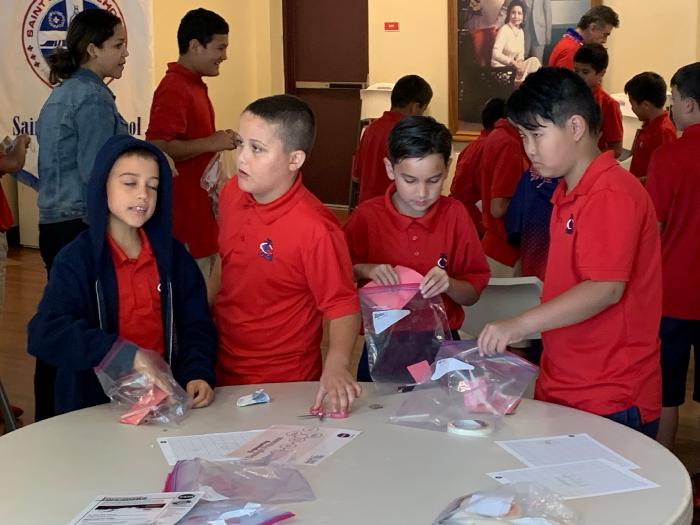
Collaborative Learning (CL) is a whole group method of teaching that breaks a large group students into smaller teams. These teams can be grouped randomly or for a specific purpose based upon skill levels, affinities, or talents depending on what the instructor wants to achieve. At Saint Louis School, all teachers attend a week worth of training in this method of teaching that provides for excellent practice opportunities amongst each group when a lesson is given. When using Cooperative Learning Groups, the learning tends to move from listening to doing. When that occurs, the amount of learning that takes place moves up dramatically - especially with boys. When placed in these groups, another advantage with boys is that you can use those teams to compete with each other, thus motivating young men to compete, which young men generally enjoy doing. The teacher orchestrates the entire lesson to ensure that there is control so that competition does not get out of hand and that it is healthy in nature.
Instruction Focused on Rigor, Relevance and Relationships
The Rigor/Relevance/Relationship Framework is used to ensure the quality of instruction at Saint Louis School by balancing the need to challenge students in regards to rigor while making learning relevant with an emphasis on building relationships. Teachers are coached in these three areas with a pre and post meeting each school year given by their principal while also being asked to create professional goals based on criteria that falls beneath specific areas for growth. The following chart is used by academic leadership to monitor where instruction falls within the four quadrants by teacher, department and the school keeping in mind that when learning is rigorous and meaningful, students learn most:

WHOLE GROUP LEARNING
The pedagogical pendulum in education swings back and forth from traditional to progressive approaches and back due to various factors. It is important to recognize this trend and avoid extremes knowing there is value in both traditional and progressive approaches to teaching and learning. At Saint Louis School, we see the value in traditional methods of teaching in addition to progressive strategies. Whole Group learning is where students of the same age and grade level learn the same content within a group setting.
Various Methods of Whole Group Learning
Direct instruction (DI) is what is traditionally thought of when referring to Whole Group Learning. Colleges use this method of teaching most when instructing students, so it is important that students do their best to learn the skills needed to thrive when DI is given. Skills like note-taking and accommodations like recording lectures can make all the difference when learning under this educational structure that unfortunately according to educational research leaves most students walking away only absorbing into their long-term memory approximately 10 percent of what was taught.
Collaborative Learning (CL) is a whole group method of teaching that breaks a large group students into smaller teams. These teams can be grouped randomly or for a specific purpose based upon skill levels, affinities, or talents depending on what the instructor wants to achieve. At Saint Louis School, all teachers attend a week worth of training in this method of teaching that provides for excellent practice opportunities amongst each group when a lesson is given. When using Cooperative Learning Groups, the learning tends to move from listening to doing. When that occurs, the amount of learning that takes place moves up dramatically - especially with boys. When placed in these groups, another advantage with boys is that you can use those teams to compete with each other, thus motivating young men to compete, which young men generally enjoy doing. The teacher orchestrates the entire lesson to ensure that there is control so that competition does not get out of hand and that it is healthy in nature.
Instruction Focused on Rigor, Relevance and Relationships
The Rigor/Relevance/Relationship Framework is used to ensure the quality of instruction at Saint Louis School by balancing the need to challenge students in regards to rigor while making learning relevant with an emphasis on building relationships. Teachers are coached in these three areas with a pre and post meeting each school year given by their principal while also being asked to create professional goals based on criteria that falls beneath specific areas for growth. The following chart is used by academic leadership to monitor where instruction falls within the four quadrants by teacher, department and the school keeping in mind that when learning is rigorous and meaningful, students learn most: